Diagnosis you can follow
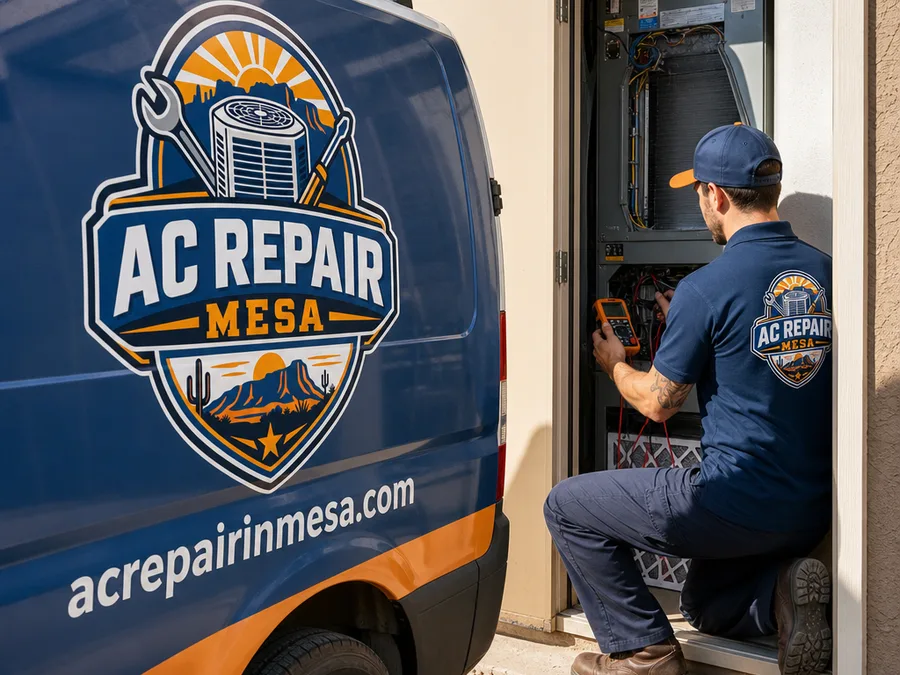
We check airflow, temperature split, electrical components, and safeties so the fix matches the cause, not just the symptom.
Serving Mesa, Arizona & surrounding areas
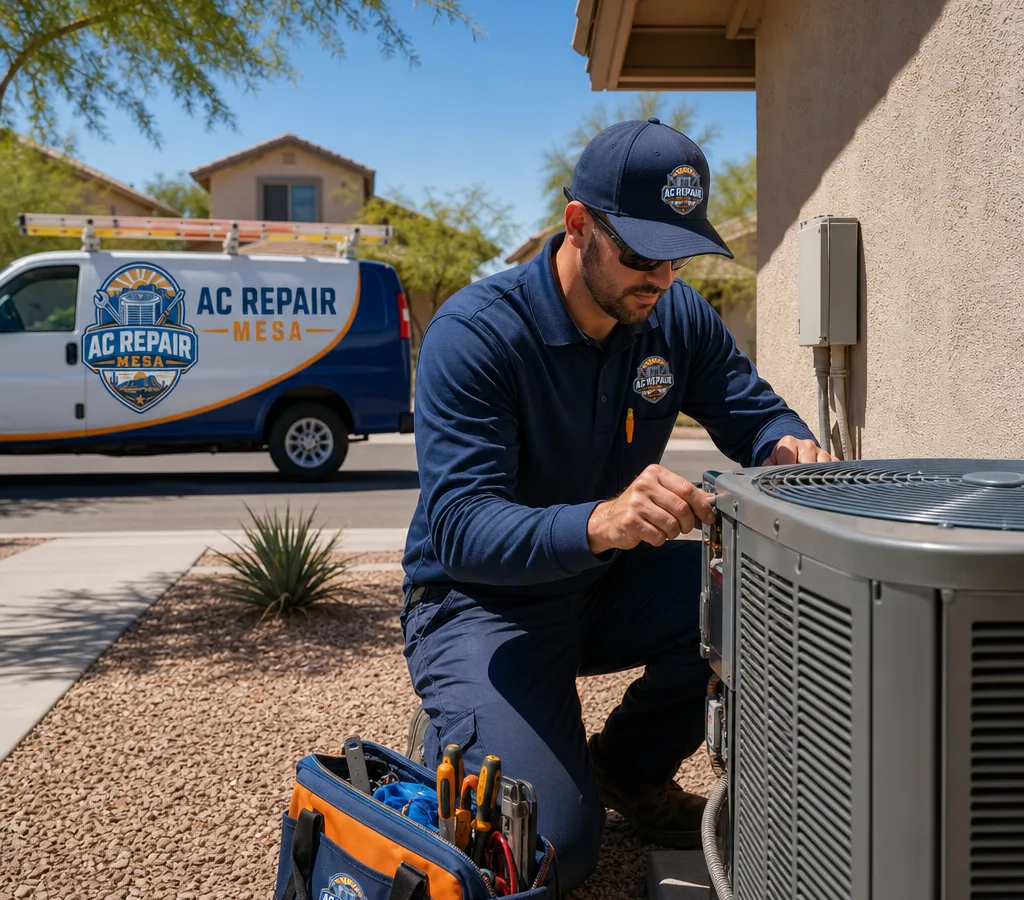
Our HVAC service process in Mesa, Arizona
See how our Mesa HVAC process moves from your first call through diagnosis, clear options, approved work, and final system verification.
A straightforward service experience
When you search hvac mesa az, you want to know not only what services are available, but what will happen after you call. Our process is built around clear communication: we document the symptoms, schedule the appropriate visit, test the equipment under operating conditions, and explain the findings before any work begins.
Mesa's long cooling season puts unusual stress on compressors, capacitors, fan motors, electrical connections, airflow, and drain systems. That is why our Mesa HVAC process does not rely on guesswork or a symptom alone. We inspect the related system components and use measurements to identify the cause.
From homes near 85204 to surrounding Mesa neighborhoods, every appointment follows the same practical path: intake, diagnosis, options, approval, service, and verification. Whether the right next step is repair, maintenance, or replacement, you receive a plain-language explanation and a defined scope first.
Clear service from start to finish
We check airflow, temperature split, electrical components, and safeties so the fix matches the cause, not just the symptom.
You get a clear plan before work starts, including options when a repair has more than one reasonable path.
In Mesa heat, loss of AC becomes urgent quickly. We focus on restoring safe, reliable cooling as fast as scheduling allows.
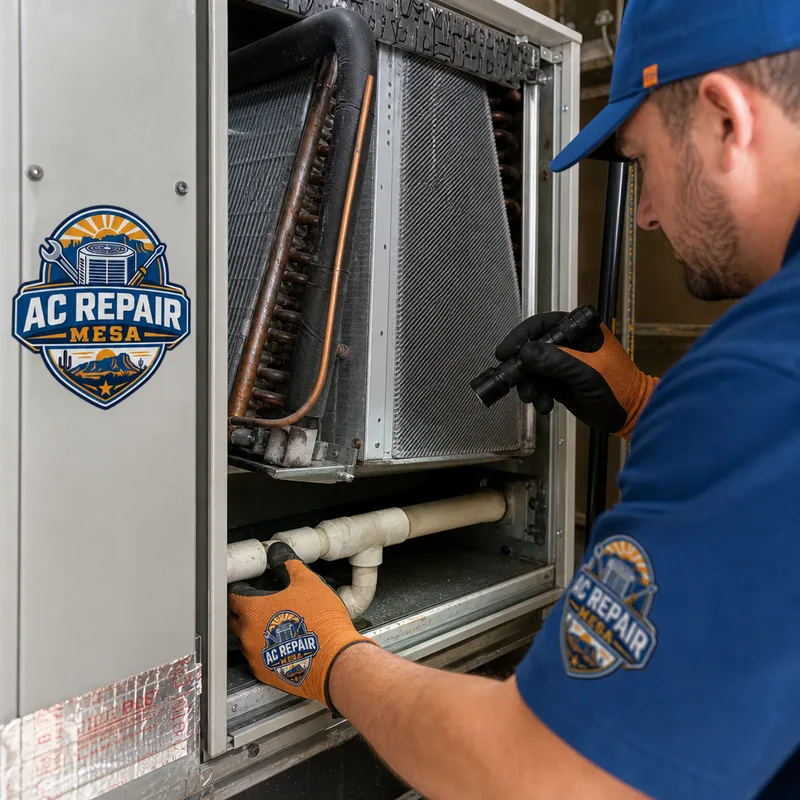
We look beyond the broken part: return air, filter fit, drain line, condenser cleanliness, and thermostat control issues that can trigger repeat failures.
We protect floors and work areas, keep panels and fasteners secure, and leave the equipment and workspace tidy.
Diagnosis before recommendations
The process begins with the symptom you noticed, then follows the evidence through the system so the recommendation addresses the actual cause.
We also service heat pumps and furnaces for the cooler months. If your heat pump struggles on chilly mornings or your furnace has ignition and safety shutoffs, we can diagnose those controls and airflow factors the same way: test, verify, and then repair.
If you are in areas like Dobson Ranch or the Fiesta District where many homes have older equipment and ductwork, we pay extra attention to airflow and return sizing because comfort issues are often a system-wide problem, not a single part failure.
Pricing explained before work begins
Most HVAC service in Mesa typically ranges from about $120 to $350 for a diagnostic and minor repair, while common part replacements, such as capacitors, contactors, or fan motors, often land around $250 to $900 installed. Larger repairs, refrigerant leak diagnosis and repair, or major component work can run $900 to $3,000+ depending on the system and what failed.
Your final price depends on the type of equipment—heat pump, split AC, or package unit—accessibility, part availability, refrigerant type and amount, and whether airflow or duct issues are part of the problem. Exact pricing is confirmed after an on-site inspection and diagnosis.
Our process, step by step
Tell us what the system is doing, the type of equipment you have if you know it, and any recent changes like breaker trips, odd smells, or new noises.
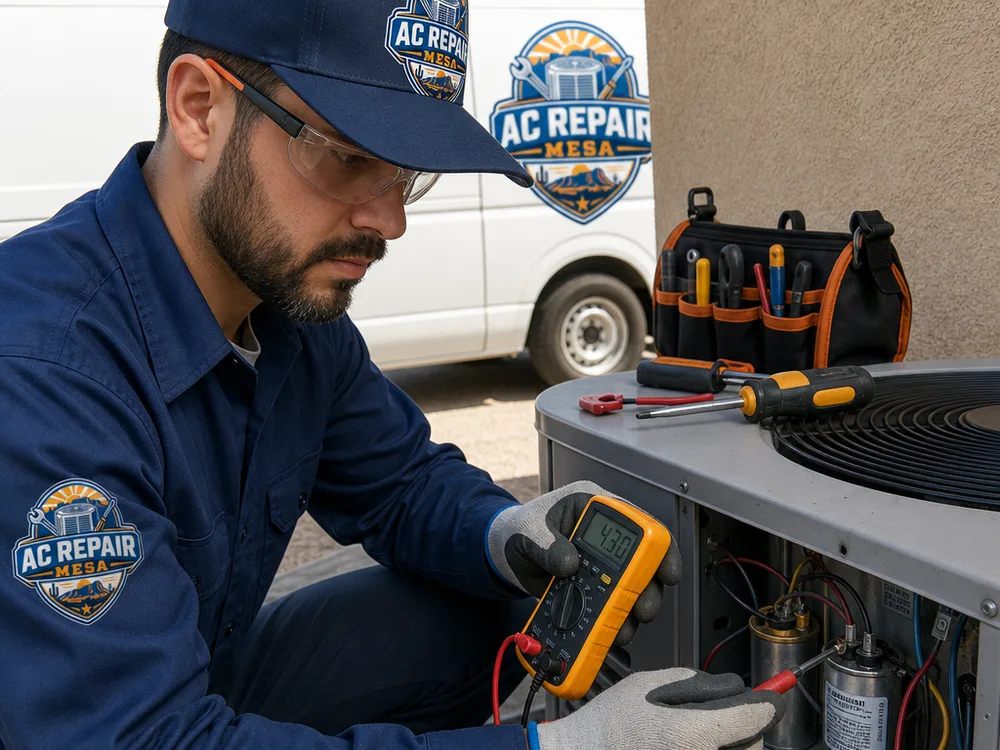
We test the system in operation: thermostat call, electrical readings, capacitor and contactor performance, temperature split, refrigerant-side indicators, and safety controls.
You get a clear explanation of what failed and what it affects, plus repair options when there is more than one reasonable fix.
After the repair, we confirm proper operation with follow-up measurements and a run check so you know the system is cooling or heating correctly.
We leave you with steps that matter in Mesa conditions, like filter intervals, keeping the condenser clear, and drain-line care during heavy AC use.
The standards behind each step
Questions about our process
Yes, we service residential systems and many small commercial setups, and we schedule the visit based on the equipment type and the urgency of the comfort issue. The first step is confirming what you have—split system, package unit, heat pump, or furnace—and the symptoms so the technician arrives prepared.
In Mesa's hottest stretches, restoring safe cooling is the priority, and same-day availability is often possible depending on the schedule and parts needed. If the fix is a common electrical component like a capacitor or contactor, it can frequently be resolved in one visit after diagnosis.
It depends on the repair cost, the condition of the compressor and coils, and whether the system has had repeated refrigerant leaks or major failures. If you are facing a high-dollar repair and the equipment has a history of breakdowns, we will walk you through replacement versus repair with realistic expectations for reliability and operating cost in Mesa.
If the system cools in the morning but struggles later, the cause is often restricted airflow, a dirty condenser coil, a weak capacitor under heat load, or low refrigerant from a leak. Mesa afternoon heat increases demand and can expose marginal electrical parts or airflow problems that seem fine at milder temperatures.
Check the thermostat mode and setpoint, replace a visibly dirty filter with the correct size, and look for a tripped breaker or a clogged drain safety switch if your system has one. If the outdoor unit is running but the air is warm, avoid repeated restarts because it can stress electrical components; it is better to have a technician test the system.
Yes, we diagnose and repair heat pumps and furnaces, including airflow issues, ignition and safety controls, and thermostat or control board problems. In neighborhoods like Eastmark and Las Sendas where homes may have newer, higher-efficiency equipment, we also pay attention to control logic and sensor faults that can look like a simple heating failure.
Start with a clear first step
Tell us what your system is doing and when the problem started. We will begin with intake and scheduling, then move through diagnosis, options, approved work, and final verification.